Jesuit Collegium
The complex of the Jesuit Collegium adorns all the photographs of the city. The building was restored in the 17th century. In 1812, the emperor of France, Napoleon Bonaparte, and famous people of Russia of that time stayed here.
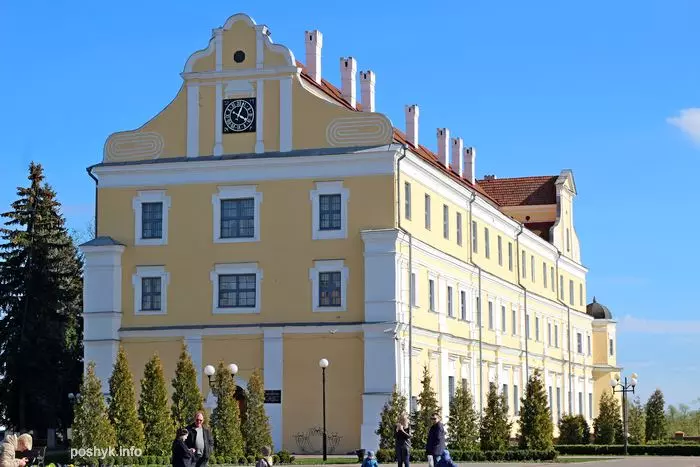
This object does not belong to either a historical or a religious monument, since it has repeatedly become the center of the cultural and political life of society.
The building was built by order of the Chancellor of the Grand Duchy of Lithuania L. Sapieha in 1604. But already in 1610, King of Poland Sigismund III opened the first educational institution here. After 100 years, the building was rebuilt in stone in the Baroque style. A music school and a pharmacy were opened, a garden was laid out with growing medicinal plants.
The collegium contained study rooms, archives, canteens, a library and other premises. The decorative clock tower was supplemented by a brick wall, which became the fence of the entire complex, not far from which the red brick church of St. Michael the Archangel was later erected.
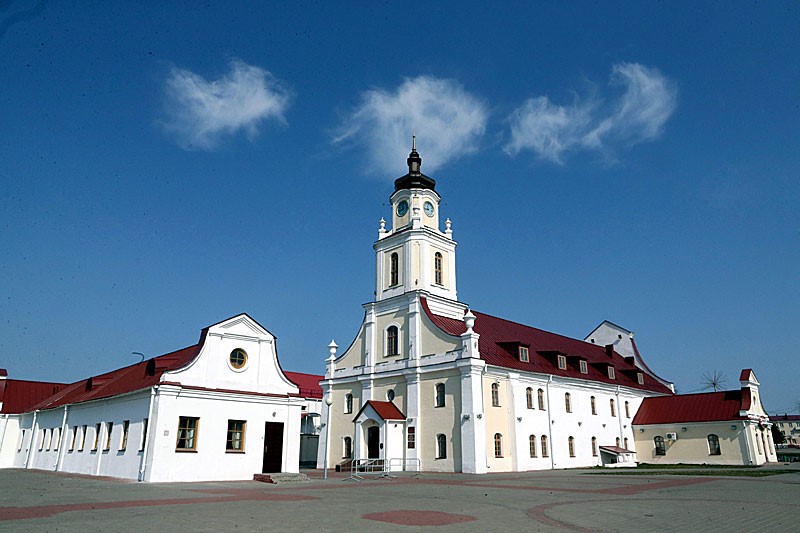
In 1820, the Orsha Collegium was closed by order of Emperor Alexander I, since the activity of the order was prohibited, and the building and all buildings were transferred to the military department.
For some time the city prison was located here, until 1989. The Catholic church was destroyed. Only at the beginning of the 21st century, reconstruction work began, which was completed by 2014. The collegium opened an art gallery, an exhibition hall and a children's library.